
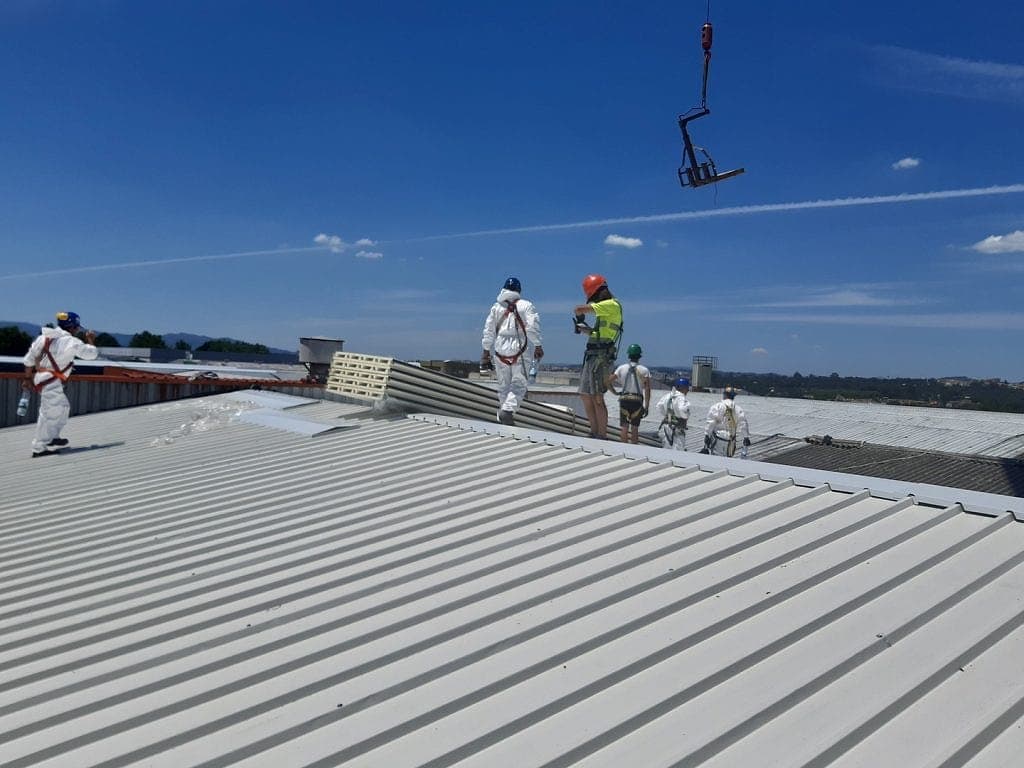
How it is made
A sandwich panel has two metal sheets — usually lacquered or galvanised steel — with an insulating core between them, such as polyurethane or mineral wool.
Benefits
- Thermal and acoustic insulation
- Watertight and durable
- Light weight and fast installation
- Many finishes and colours
- Suitable for roofs and façades
How to choose the right panel
- Required insulation: sets thickness and core type
- Distance between supports (purlins): sets minimum thickness
- Building use: industry, warehouse, agriculture, food
- Fire-resistance requirements
- Finish and colour
Sandwich panel vs. asbestos-cement sheet
Compared with asbestos-cement, sandwich panels offer insulation, lower weight, better watertightness and no asbestos. If you have an asbestos-cement roof, see our roof replacement service.
Frequently asked questions
Difference between single sheet and sandwich panel?
A single sheet does not insulate; a sandwich panel has thermal and acoustic insulation between two sheets.
How long does a sandwich panel last?
It depends on material, finish and maintenance, but it is a durable solution when properly installed.
Can I use sandwich panels on façades?
Yes, there are panels designed for façade cladding.
General information only; not a substitute for technical or legal advice.
Need a quote?
Send us photos and the job location. We reply with a tailored proposal.