
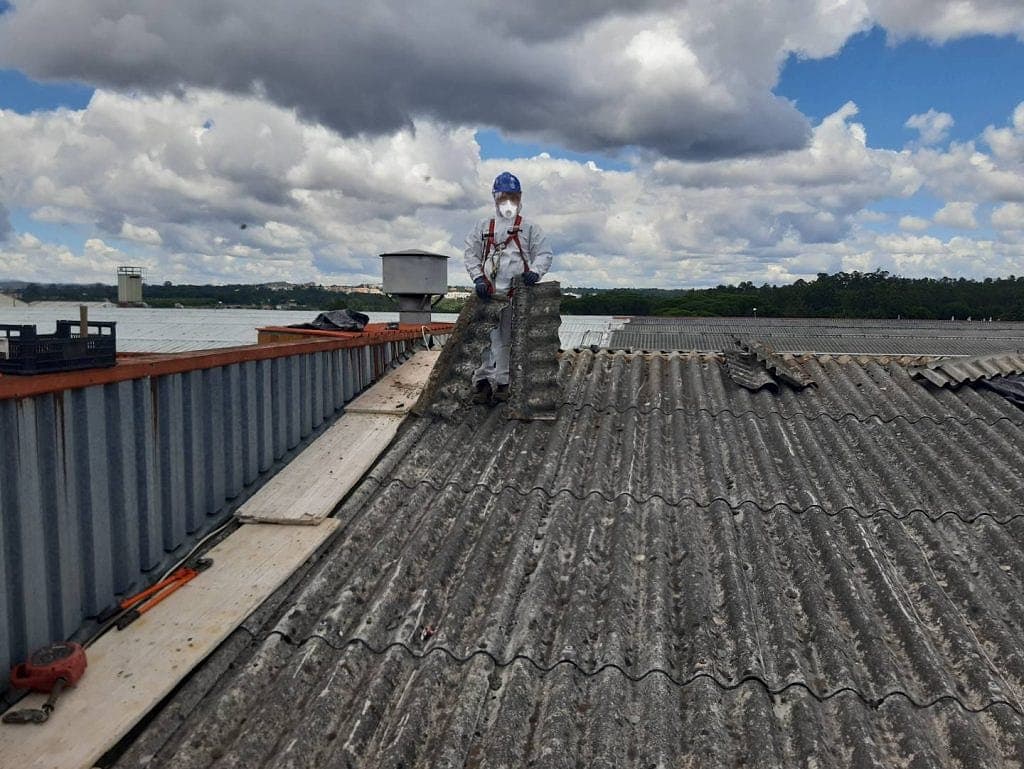
What is asbestos
Asbestos is the name of a group of natural minerals made of very fine, strong fibres. Thanks to its durability, fire resistance and low cost, it was widely used in building materials, insulation and brakes during much of the 20th century.
In buildings its most common use was asbestos-cement: cement mixed with asbestos fibres, moulded into corrugated roof sheets, façade panels, gutters, pipes and tanks.
Why it is dangerous
Asbestos fibres are microscopic. When the material degrades, breaks or is worked on, fibres can become airborne and be inhaled, lodging in the lungs. Exposure is linked to diseases such as asbestosis, lung cancer and mesothelioma, which can appear many years after exposure.
Because it is classified as carcinogenic, asbestos use has been banned in the European Union.
When asbestos-cement becomes a risk
- When sheets are degraded, porous or crumbling
- When they are broken, drilled, sawn or sanded
- When they are pressure-washed, which breaks down the surface
- In fires or works that affect them
Intact sheets in good condition pose a much lower risk, but ageing is inevitable — hence the advice to plan replacement.
What to do if you suspect asbestos
- 01Do not break, drill, saw, sand or pressure-wash the sheets.
- 02Keep people off the roof.
- 03Identify the material — see our guide on identifying asbestos.
- 04Contact a specialist company for assessment and a quote.
Frequently asked questions
Is intact asbestos dangerous?
The main risk comes from fibre release. Intact material in good condition releases very little, but it degrades over time and any work on it can disturb it. It should be monitored and removal planned.
Is asbestos still allowed?
No. Placing asbestos on the market and using it is banned in the European Union. Old materials remain, however, in buildings constructed before the ban.
Where can I find asbestos at home or at work?
Mostly in asbestos-cement roofs, façade cladding, pipes, gutters, tanks and some insulation in older buildings.
General information only; not a substitute for technical or legal advice.
Need a quote?
Send us photos and the job location. We reply with a tailored proposal.